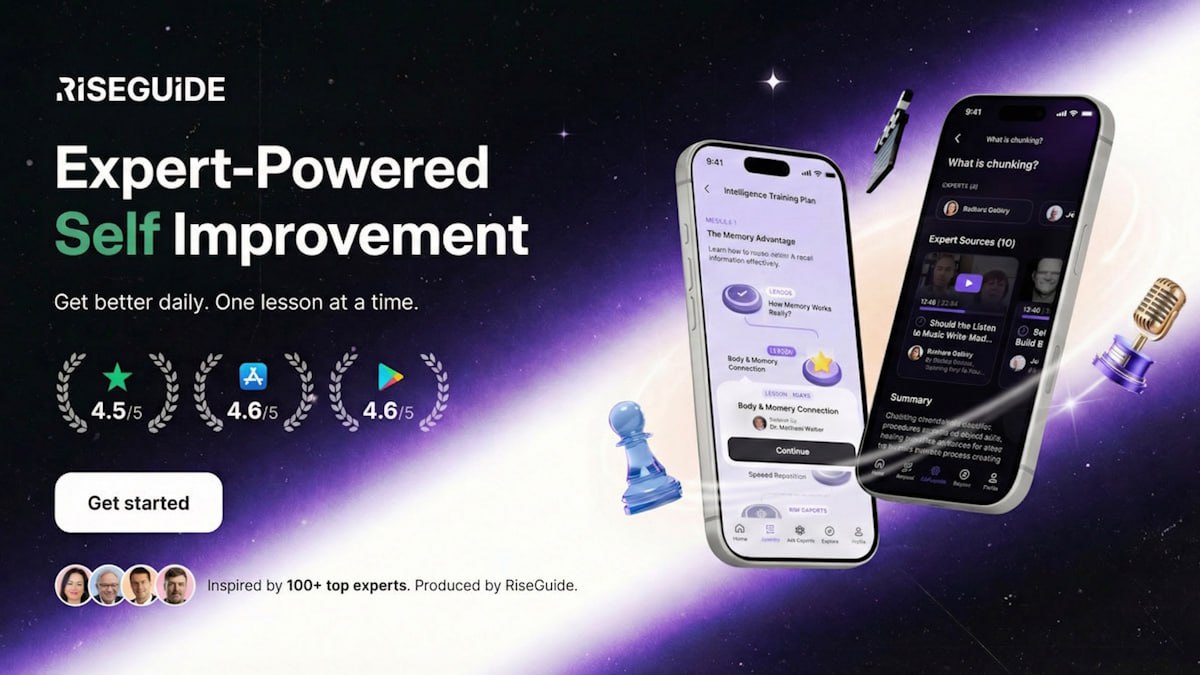
You’ve watched the videos. You’ve read the summaries. But the skill never materializes. This is the classic trap: mistaking content consumption for actual development. Real microlearning isn’t about brevity. It’s about a formula: short bursts plus regularity plus action. Different platforms execute this formula in wildly different ways. Some build daily practice systems. Others offer long guided journeys. Many just give you a big library and wish you luck. This breakdown focuses on their learning models, not just their content libraries. Because according to our data, there’s no single winner. Only the right fit for how you learn.
What Actually Makes Microlearning Effective
Let’s get this straight. A five-minute video is just a short lecture. Effective skill building needs more. It needs a structure that prompts regular engagement. It needs tools that force you to apply the lesson, not just hear it. Honestly, the magic isn’t in the content length. It’s in the system surrounding it. The platforms below are separated by how they solve these three puzzles: creating consistency, enabling action, and providing a clear path. Their core mechanics tell the real story.
The key distinctions between platforms are found in their operational mechanics:
- Regularity is engineered into the user experience or left as a personal challenge;
- The bridge from knowledge to applied action is either built-in or absent;
- Learning structure is either a rigid path, a flexible system, or a chaotic free-for-all;
- Content depth trades off directly against daily flexibility.
These factors determine whether a platform builds habits or just delivers information.
RiseGuide
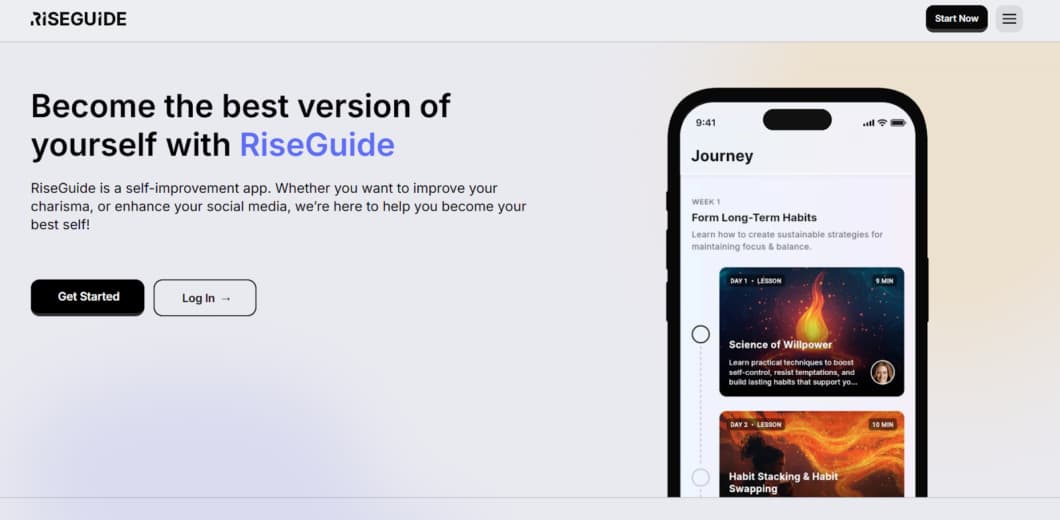
RiseGuide treats microlearning as a daily practice ritual. It’s built on the premise that development happens through small, consistent actions. The platform structures short lessons into a system designed to turn learning into doing, making it a solid case study in engineered habit formation.
How the Model Turns Short Lessons Into Daily Practice
The model starts with bite-sized daily lessons organized into skill paths like communication and memory. This isn’t random. It’s a curriculum. The SEEK tool lets you pull expert methods for specific problems on demand. Interactive elements such as templates, exercises, and daily tasks are the critical piece. They convert a lesson into an immediate action. The Explore section adds breadth without blowing up the structure. It is a complete model for learning through repeated micro-actions.
The platform’s strength is its systematic push from passive consumption to active routine. It’s built for the daily grind. Its structural features are explicit:
- Short, sequenced daily lessons form the backbone of skill paths;
- The SEEK function provides direct access to expert methods and answers;
- Interactive tools like templates and exercises mandate practical application;
- A broad Explore library allows topic expansion within a managed framework;
- The entire design prioritizes repeatable action over theoretical understanding.
You get a coach, not just a library. The trade-off is real, though. This model demands regular commitment from you. Progress feels gradual, not instant. The array of options might dizzy you at first. Pick one path and stick with it for a few weeks.
MasterClass
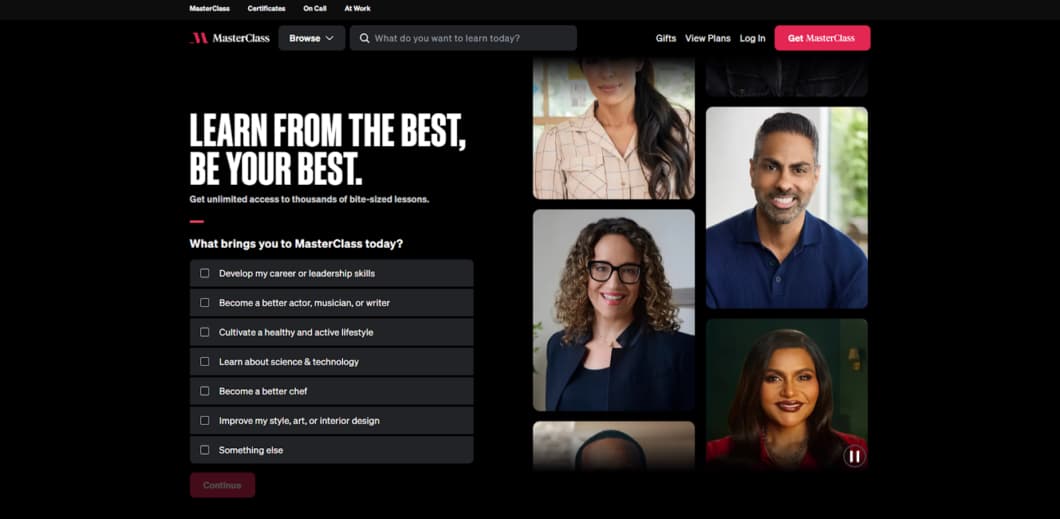
MasterClass sells a different dream: access to genius. The model is about perspective and peak performance insight. You learn how the best in the world think about their craft. It’s inspirational viewing, not a calibrated daily practice system.
Expert Insight Without Built-In Daily Structure
The format is high-production video lectures from celebrated figures. The strength is raw, unfiltered insight into creative and professional processes. You see a director block a scene. You hear a novelist wrestle with character. The production value is stunning. But the model lacks any apparatus for daily drills or structured practice. You receive wisdom, not a workout plan.
This platform is exceptionally good for understanding how masters approach problems. It expands your thinking. Its learning model is defined by these characteristics:
- Lessons are delivered by iconic, widely recognized experts and performers;
- The focus rests squarely on sharing perspective, experience, and creative philosophy;
- Production quality is cinematic, supporting long-form, immersive viewing;
- Built-in structures for daily skill rehearsal or habit formation are basically nonexistent.
It’s a master’s lecture series. Building the discipline to practice what you’ve learned is entirely your job.
Mindvalley
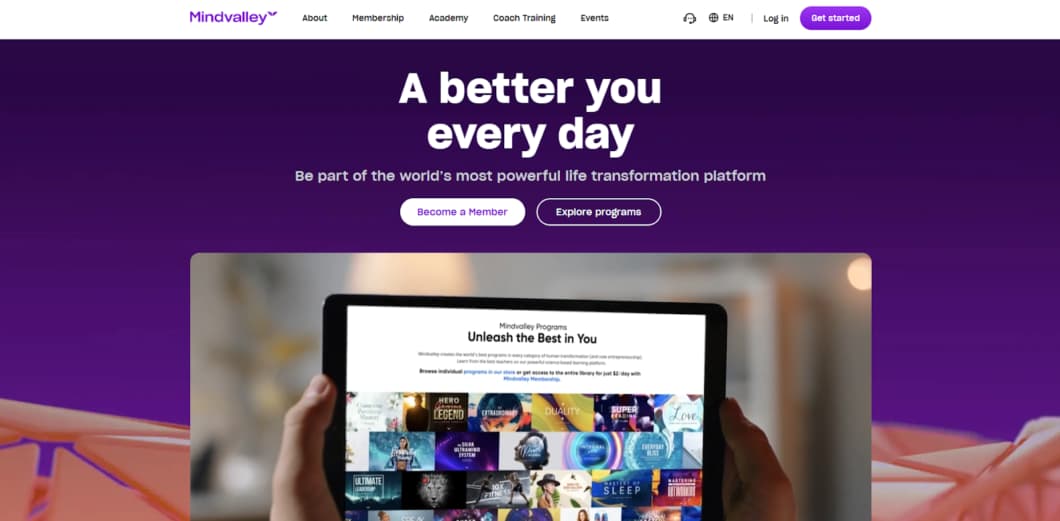
Mindvalley approaches growth as a transformational quest. Its model uses program-based learning, often spanning weeks, focused on inner change. Think mindset shifts, energy work, spiritual practices. This is deep, sequential work, a far cry from flexible daily micro-drills.
Program-Based Learning Instead of Flexible Micro Drills
Users commit to full programs like “The Silva Ultramind System.” A teacher guides you through a set sequence of concepts and exercises. The emphasis is on profound internal development, not just adding a discrete skill. You trade daily flexibility for programmatic depth. Jumping from communication to mindfulness each day isn’t the design.
The logic is one of deep, guided immersion rather than daily topic sampling. The model’s signature traits include:
- Learning is packaged into long-term, structured personal development programs;
- Content focuses intensely on mindset, wellbeing, and transformational change;
- Progression follows a strict sequence, not a pick-and-choose daily format;
- The design offers less agility for switching between different skill topics on a whim.
Choose this for a guided journey, not for daily tactical skill switches.
Studio
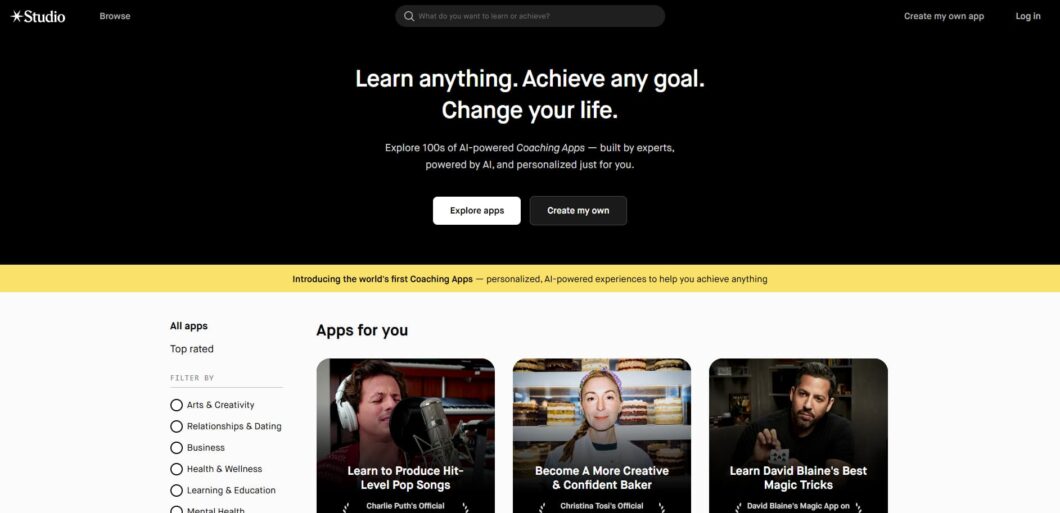
Studio zeros in on creative skill development. Its model is project-driven. Learning is tied directly to creating a tangible output such as a song, a design, or a meal. Guidance comes from practicing creatives, making it intensely practical within a well-defined lane.
Project-Driven Skill Building Model
Every course revolves around a hands-on creative project. You learn audio engineering by finishing a track. Lessons serve the next step in the project pipeline. This tight coupling of theory and immediate application is effective for craft skills. The scope, however, is narrow. It’s for making things, not for broad self-improvement like building charisma or better habits.
This is practical learning with a clear finish line. The approach has specific features:
- Courses are centered on hands-on creative skill building and execution;
- Practical project outputs are the primary objective and measure of learning;
- Instruction typically comes from working professionals in specific creative fields;
- Broader personal development themes and soft skills are not the focus.
You come here to build a portfolio piece, not to transform your daily routine.
Udemy
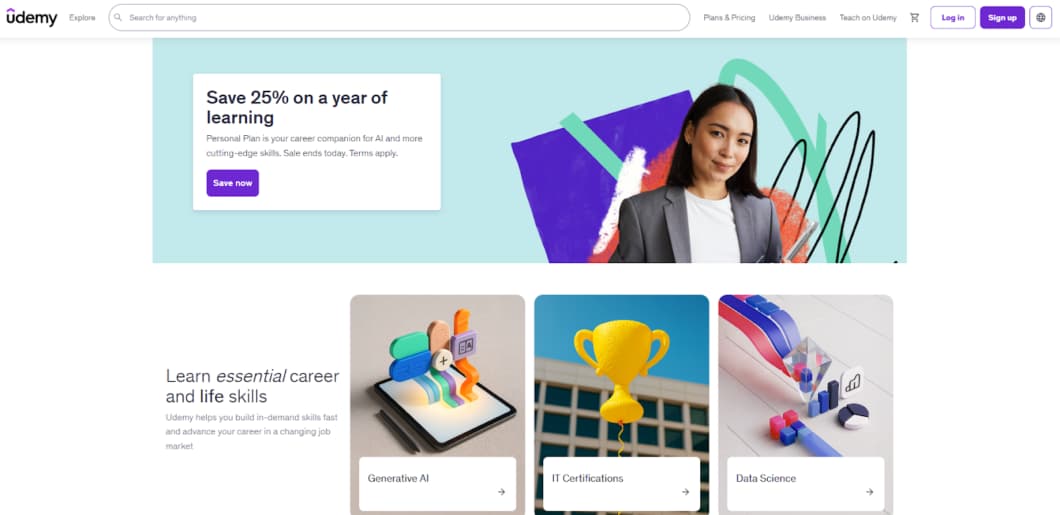
Udemy is a marketplace. A massive marketplace of courses with highly varied quality. It provides access to deep instruction on nearly any topic imaginable. A native microlearning system does not exist at the platform level. The platform delivers content. You manage everything else: structure, schedule, accountability.
Course Marketplace With Self-Managed Structure
The catalog is undeniably huge. Want to learn Python or pottery? You’ll find ten courses. Depth is possible if you find a good instructor and stick with their program. But quality is a gamble, changing completely from one course to the next. There is no platform-wide design for daily practice or habit support. You are the architect of your own learning process.
This model offers freedom paired with total responsibility. Its nature is clear from these points:
- The platform offers an extremely wide range of topics and instructors;
- Significant depth is achievable within a single well-constructed course;
- Course quality and teaching style vary to an extreme degree;
- Daily learning structure and habit formation tools are absent at the platform level.
Udemy is for self-directed learners who bring their own discipline and structure.
Deepstash
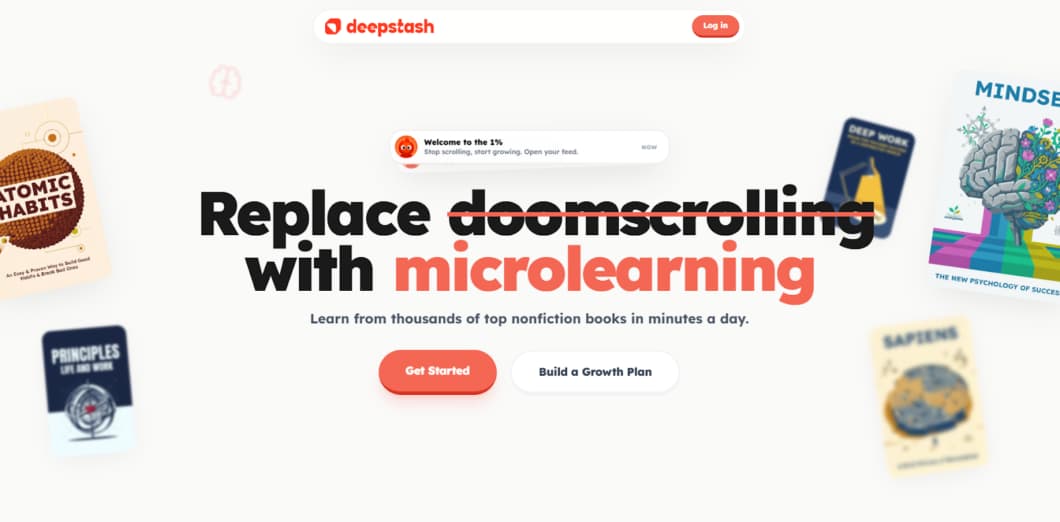
Deepstash deals in ideas, not skills. The model is about curating insights and concepts from books and articles into short, consumable cards. It’s for expanding your mental library of ideas quickly. It is not a system for training a skill through practice.
Idea-Based Learning Rather Than Skill Training
The format is brief idea cards, summaries, and key concepts. It’s great for broadening your perspective and gathering intellectual fodder. The consumption is fast and visual. But the model is limited for sequential skill training. You get an insight about productivity, not a daily framework to implement it. It’s inspiration on tap, not a practice regimen.
Think of it as a stream of consciousness from smart people. This format’s hallmarks are distinct:
- Content consists of short, distilled ideas and insights from various sources;
- The platform is optimized for quick consumption and broadening general knowledge;
- The format is inherently limited for building skills through structured, repeated practice;
- It functions more as a feed of concepts than a training program.
Use it to find interesting thoughts, not to build reliable habits.
Conclusion
The main takeaway should be obvious now. These platforms differ in their fundamental learning architecture, not just their topic lists. Lasting skill development emerges from regular application, a truth no amount of brilliant content can bypass. The right tool depends entirely on your learning style, available time, and existing self-discipline.
Do you need the engineered daily system of a RiseGuide? Maybe the inspirational deep dives of MasterClass fit your goals better. Perhaps you’re a project-focused learner suited for Studio, or a self-starter who can thrive on Udemy’s open marketplace.
The choice is about congruence. Match the platform’s model to your personal operational style. That fit is what actually builds skills. Everything else is just noise.